





Skip links

The Unseen

A socially critical game about the collective invisibility of homeless people in urban transit systems.

✦ UX Design / Game Design
✦ Serious Game
✦ Social Invisibility

Project Brief

A Game About Invisibility

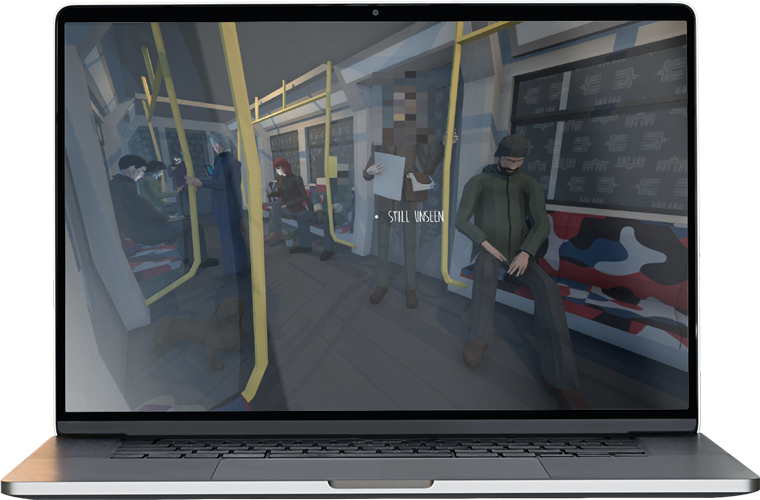
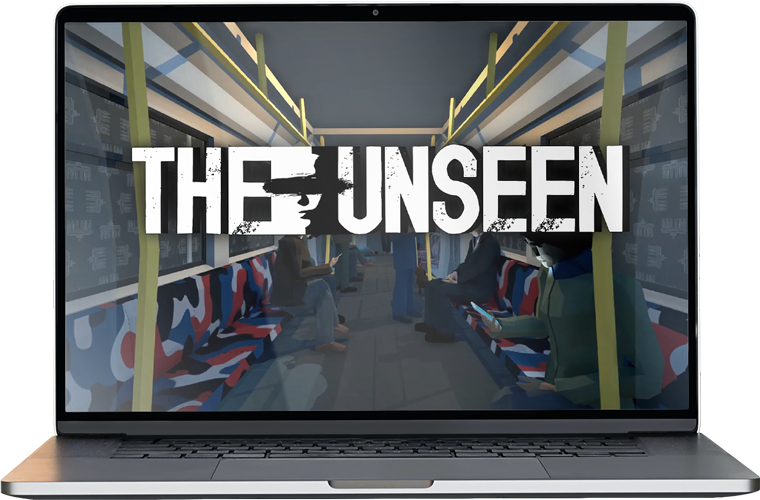
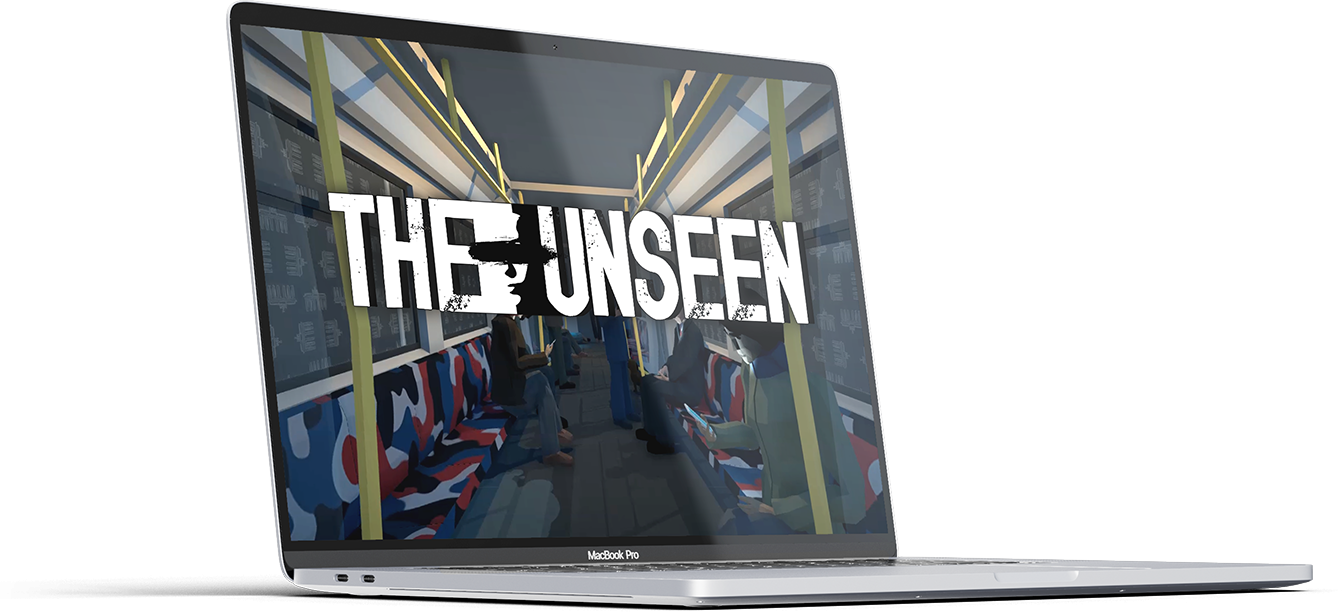
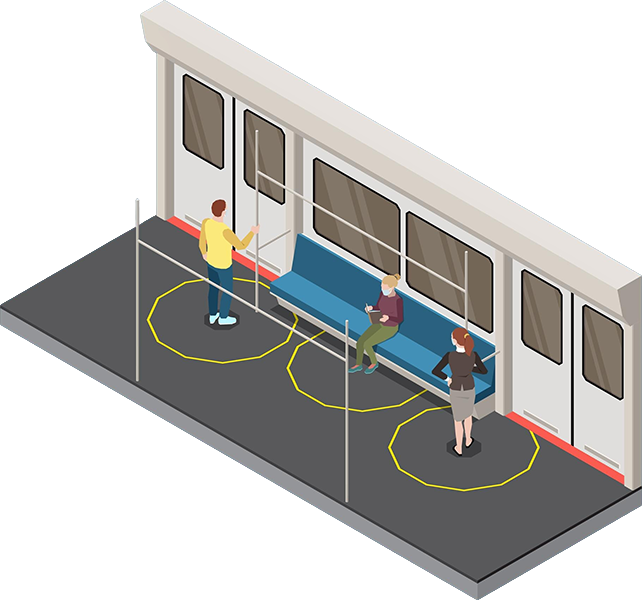
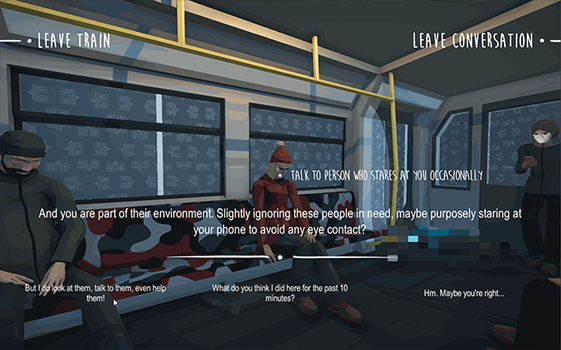
"The Unseen" began with a very basic yet disturbing idea – that there are certain kinds of people whom we don’t notice when we encounter them within public spaces, because we tend to see through them instead of looking at them. Taking place within the Berlin subway system, the game requires that the players interact with those people that are often neglected, eventually finding out their back stories. This is an expansion on a project based on previous investigations into the concept of Procedural Rhetoric.

Details

Platform

Desktop

Team Size

Sole Ownership

Focus

Game Design, Game Art, User Research, Narrative Design

TLDR

A serious game exploring social invisibility, built on Procedural Rhetoric — where the mechanics themselves are the message — awarded Best Bachelor Project 2019.

The Final Design

Understanding More Than Just the Player

Empathize

01

I shifted from only understanding the user to also understanding the group I wanted to represent. I assessed popular video games and found the potential for users to have a distorted view of the realities of homelessness and the potential to even develop negative stereotypical tropes.

01 Beyond Surface Research

The empathize phase went further than most game projects require. Researching social invisibility, systemic inequality, and the lived realities of homelessness meant engaging with real stories rather than relying on generalizations. Conducting interviews with people who had experienced homelessness directly was essential — not just for accuracy, but for the kind of nuance that separates a respectful portrayal from a reductive one.


The empathize phase went further than most game projects require. Researching social invisibility, systemic inequality, and the lived realities of homelessness meant engaging with real stories rather than relying on generalizations. Conducting interviews with people who had experienced homelessness directly was essential — not just for accuracy, but for the kind of nuance that separates a respectful portrayal from a reductive one.
01   ✦   EMPATHIZE

The Underlying Model

My research was the bachelor thesis in which I analyzed several games addressing either unhoused people or even just economically disadvantaged people through the lens of the procedural rhetoric model.

Procedural rhetoric is the practice of persuading through processes in general and computational process in particular. (p.3) […] its arguments […] through the authorship of rules of behavior, the construction of dynamic models (p.29).

— Ian Bogost, Persuasive Games

01   ✦   EMPATHIZE

The Reasoning

K.

Homeless for 8 months

"People look at their phones. Not mean about it — just gone. Like I'm invisible. Sometimes I talk just to hear that I'm still here."

M.

Commuter

"I just look away. Not because I'm cruel — I simply don't know what to do. It feels wrong no matter what I do."

T.

Student

"Everyone ignores the guy, so I do too. Don't even know why. It'd be weird if I were the only one looking."

Defining Opportunities & Limits

Define

02

The core problem was framed around a single question: can a game's rules — not its story — be the thing that produces empathy in the player?

02   ✦   DEFINE

End User ≠ Sole Focus,
so no Pain Points?

No. Both the group I am depicting in the game and the end user are taken into consideration. But the focus is the mechanic and what it will convey to the user, less so if the end user has a happy path user journey.
The kind of depiction I was going for had nothing to do with happy.

01 Rhetoric Through Rules

Defining the project meant committing to Ian Bogost's concept of Procedural Rhetoric as the design foundation. Rather than telling players how to feel through cutscenes or narration, the game needed to encode meaning directly into its mechanics. This framing had real consequences for every design decision that followed — if a mechanic didn't communicate something about social invisibility, it didn't belong in the game.

Defining the project meant committing to Ian Bogost's concept of Procedural Rhetoric as the design foundation. Rather than telling players how to feel through cutscenes or narration, the game needed to encode meaning directly into its mechanics. This framing had real consequences for every design decision that followed — if a mechanic didn't communicate something about social invisibility, it didn't belong in the game.

01 Scope vs. Sensitivity

The define phase also had to reconcile two competing constraints: the responsibility of handling a socially significant subject with care, and the reality of a two-month solo development timeline. Defining these boundaries early — prioritizing game design depth over visual polish, for instance — prevented scope creep from undermining the project's core intent.

The define phase also had to reconcile two competing constraints: the responsibility of handling a socially significant subject with care, and the reality of a two-month solo development timeline. Defining these boundaries early — prioritizing game design depth over visual polish, for instance — prevented scope creep from undermining the project's core intent.

How Might We
How Might We

01

HMW

...make looking away visible without judging?

02

HMW

...force players to take on the perspective of the invisible person?

03

HMW

...make small moments of recognition emotionally tangible?

04

HMW

...show that invisibility is a collective, not an individual failure?

05

HMW

...allow the game to end without the problem being resolved?

06

HMW

...represent dignity as a playable resource that depletes?

Exploring Possibilities

Ideate

03

Ideation centered on translating abstract social dynamics into concrete game mechanics, ensuring every interaction served the game's rhetorical goals rather than just its entertainment value.

04   ✦   Ideate
One Main Mechanic

Learning via Game Mechanic

Procedural Rhetoric describes how meaning is conveyed through a game’s interactive systems—such as rules and mechanics—rather than through traditional elements like narrative or visuals. So the message had to be in the mechanic itself.

From Invisible to Visible

With invisibility as the main theme of the game, most ideas revolved around a player having to make sure to "make" someone visible.
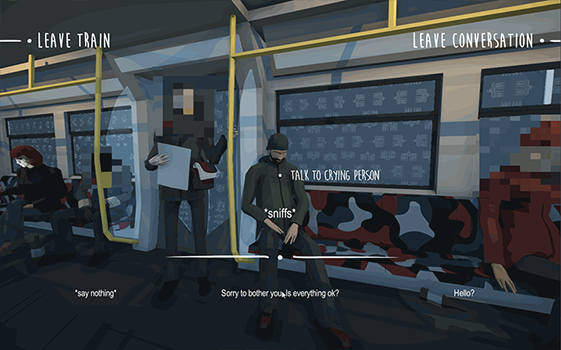
To achieve that players need to talk to the people that are invisible. Finding out about their story players are able to literally make people feel seen.

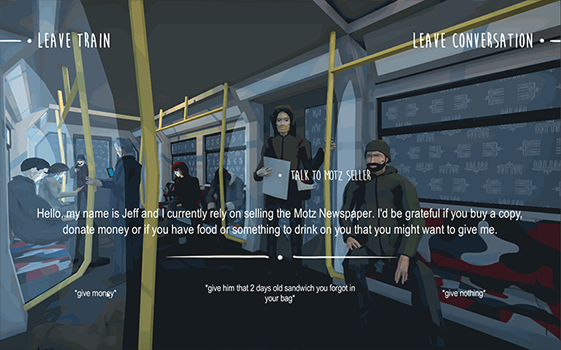
"An older gentleman enters the compartment and explains that he is selling magazines in order to pay for a place to sleep. It is the middle of winder and he looks exhausted."

Continue staring at your phone

Look back briefly

Leave the Train

Indecision

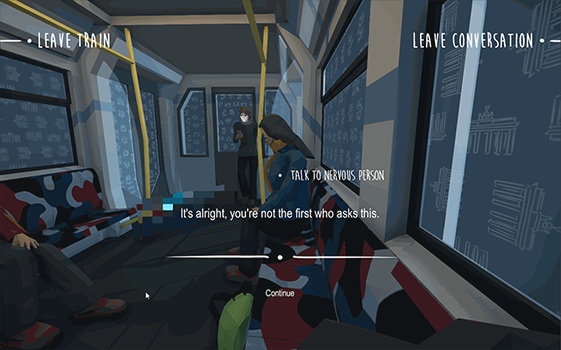
No answer is right. Looking away means a loss of dignity for the unhoused person. Looking at them creates social pressure from other passengers. Speaking to them causes discomfort among them. The game makes it clear: the system is the problem, not the decision.

Narrative

Having a cognitive bias is not as uncommon as one would think, most people are affected to a certain level. Biases about unhoused people can be "They are lazy.", "They exploit the country and people." or "No one needs to be unhoused, they chose this."
When choosing to be rude, to leave or to do nothing, talking to the next person will be unavailable, because the player did not listen.

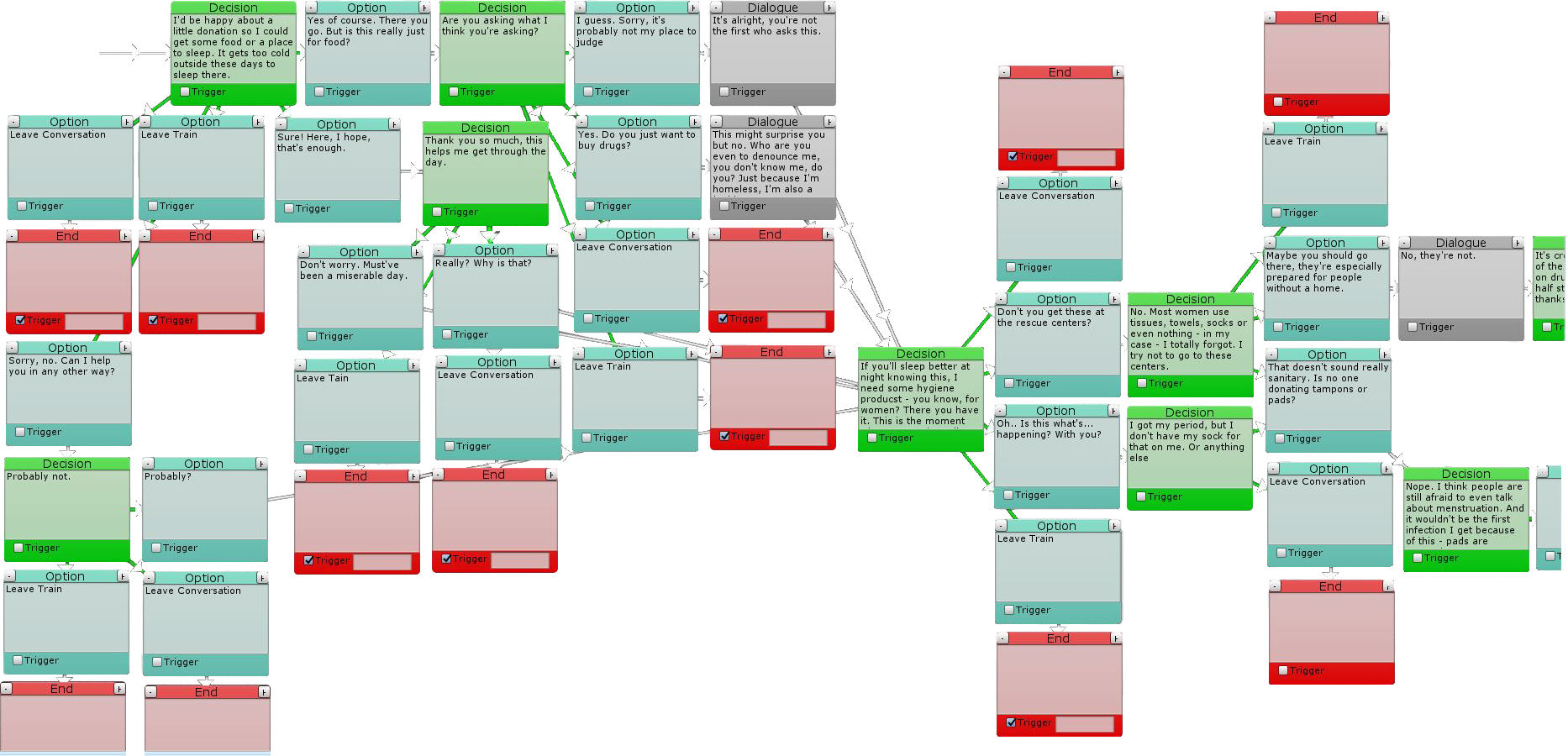
Small part of the early version conversation tree

01 Mechanics as Message

Every mechanic in The Unseen was ideated with Procedural Rhetoric in mind. The branching dialogue system, for instance, wasn't just a narrative tool — it was designed to reflect the unpredictability and fragility of real human connection. Certain conversation paths leading to a dead end wasn't a design flaw; it was a deliberate statement about what happens when people disengage.

Every mechanic in The Unseen was ideated with Procedural Rhetoric in mind. The branching dialogue system, for instance, wasn't just a narrative tool — it was designed to reflect the unpredictability and fragility of real human connection. Certain conversation paths leading to a dead end wasn't a design flaw; it was a deliberate statement about what happens when people disengage.

02 Unconventional Failure States

One of the more distinctive ideation decisions was the choice to let the game halt entirely as a consequence of certain player choices. Where most games protect the player from true failure, this mechanic deliberately denied progression — forcing players to sit with the consequence of disengagement in a way that a game over screen never could.

One of the more distinctive ideation decisions was the choice to let the game halt entirely as a consequence of certain player choices. Where most games protect the player from true failure, this mechanic deliberately denied progression — forcing players to sit with the consequence of disengagement in a way that a game over screen never could.

Bringing Concepts to Life

Prototype

04

With a minimal art style chosen to preserve development time for game design, each prototype iteration was evaluated as much for its emotional impact as for its technical functionality.

<sup style="font-size: 14px;">01</sup> 
Iterative Development

01 Iterative Development

I iterated from low- to mid-fidelity prototypes and ran A/B tests to validate the concepts early. The response? Overwhelmingly positive. The prototype underwent continuous refinement based on user input and data insights, evolving through multiple iterations.

<sup style="font-size: 14px;">02</sup> 
Design System

02 Design System

I built a modular component library with themeable design tokens, enabling rapid seasonal reskins - all while preserving visual consistency across the game's design system. The most fascinating challenge emerged in balancing macro- and micro-adaptivity. How could individual components adapt fluidly at the micro level while maintaining visual cohesion across the macro system?

01 Minimalism as Strategy

The decision to adopt a minimalist visual style wasn't purely aesthetic — it was a deliberate scoping call that freed up development time for the mechanics and narrative that actually carried the game's meaning. The muted, realistic color palette still served the emotional tone, but without the overhead of a more detailed art direction that would have been impossible to execute solo in two months.

The decision to adopt a minimalist visual style wasn't purely aesthetic — it was a deliberate scoping call that freed up development time for the mechanics and narrative that actually carried the game's meaning. The muted, realistic color palette still served the emotional tone, but without the overhead of a more detailed art direction that would have been impossible to execute solo in two months.

02 Narrative Meets Level Design

Prototyping revealed how tightly narrative design and level design were intertwined in this project. Because the game's progression was entirely conversation-driven, every spatial or structural decision was also a narrative decision. Testing different dialogue tree structures meant testing the level simultaneously — the two couldn't be iterated on independently.
Prototyping revealed how tightly narrative design and level design were intertwined in this project. Because the game's progression was entirely conversation-driven, every spatial or structural decision was also a narrative decision. Testing different dialogue tree structures meant testing the level simultaneously — the two couldn't be iterated on independently.
Given the technical constraints of an outdated game engine, in this phase a lot of great concepts had to be buried.

04   ✦   Prototype

Fitting Visuals

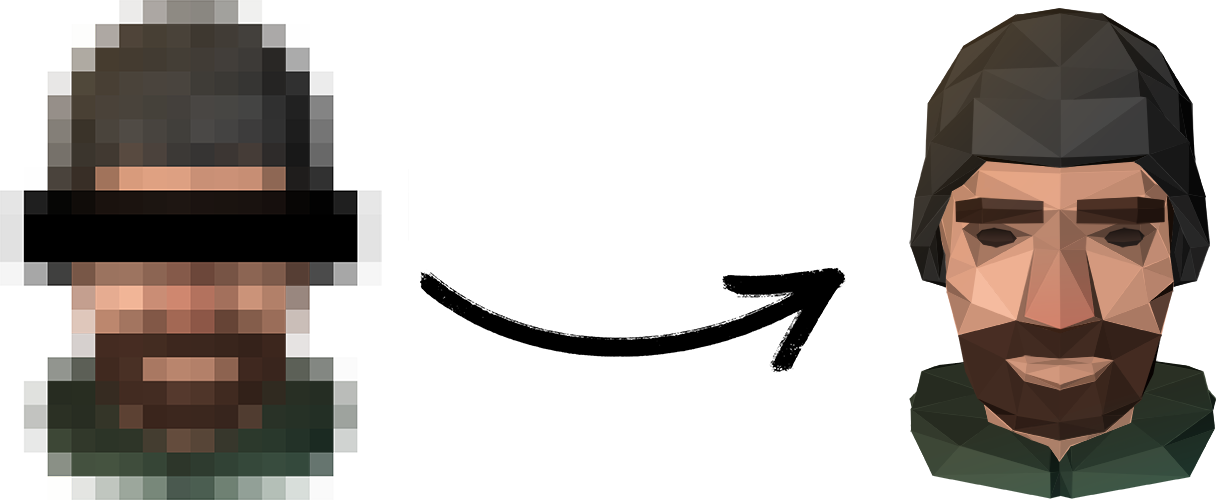
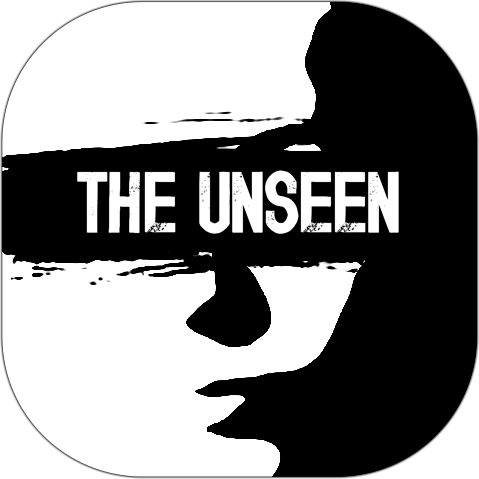
Even when it came to logo design, I wanted to emphasize the main mechanic. They have no color and are in black and white, as opposite colors as possible, symbolizing the harsh black and white biases that exist around that issue.

04   ✦   Prototype
A Prototype made with bitsy

The Very First Prototype

This idea has been in development for quite some time. I previously created a smaller game called Pvrty with a similar theme during a game jam, which served as an early exploration of the concept. The issue resonated deeply with me, inspiring a desire to create a more impactful and meaningful game to further explore and address it.

04   ✦   Prototype
Link to the prototype

The Final Prototype

This project reflects my dedication to using game design as a medium for social impact, fostering empathy, and sparking critical dialogue about pressing real-world issues. It is an invitation to reflect, connect, and see the world through a more compassionate lens.

Testing with Users

Test

05

Late-stage playtesting with a more diverse group of testers surfaced a critical insight that led to a significant design change in one of the game's main interactions.

01 Baby Steps

Early playtesting was limited in scope, but expanding the tester group toward the end of development proved decisive.

Early playtesting was limited in scope, but expanding the tester group toward the end of development proved decisive.

A more diverse set of perspectives revealed blind spots that a smaller, more homogenous group had missed. One of the game's main interactions was redesigned entirely as a result.

02 Emotional QA

Testing a serious game requires evaluating more than usability. The key question wasn't just whether the game functioned correctly, but whether it was achieving its emotional objectives,  whether players were leaving with a shifted perspective or simply a completed play session.

Testing a serious game requires evaluating more than usability. The key question wasn't just whether the game functioned correctly, but whether it was achieving its emotional objectives, whether players were leaving with a shifted perspective or simply a completed play session.
This added a layer of qualitative assessment to the testing process that most conventional QA frameworks don't account for.

05   ✦   Test

The Unseen

The game was created as a solo project over two months. Earlier playtesting could have improved the process — feedback late in development led to a fundamental change in a core interaction. Testing showed that the game leaves players with an uncomfortable feeling, which is understandable given the topic.

What I Achieved

Impact & Learnings

06

Solo development at this scope taught that early, broad playtesting and clearer task prioritization from the start would have meaningfully improved both the process and the outcome. The game was awarded 1st prize for Best Bachelor Project 2019, and succeeded in its core goal of using game mechanics — not narrative alone — to foster genuine empathy and critical reflection in players.

✦   Impact & Learnings
Final Notes

Key Takeaways

Vertical Slice First
Prioritization

Prioritization

Managing all aspects of development alone was challenging, especially with a grand scope and high attention to detail. In the future, collaborating or delegating tasks could enhance efficiency and allow more focus on key areas like game mechanics.

Test early prototypes
Extended Testing

Extended Testing

While testing towards the end of development yielded valuable insights, conducting broader playtests earlier in the process could have identified usability issues and informed design adjustments sooner.

✦   Impact & Learnings
Final Notes

The Impact

Deeper understanding
Emphasize on another Level

Emphasize on another Level

This project deepened my grasp of crafting content that is authentic and credible. I also gained a profound understanding of designing an empathetic user experience while exploring the importance of accessibility.

Winner
Award

Award

The game was awarded "Best Bachelor Project" in 2019, recognizing it as the top B.A. project within its major.

✦   Contact Me

Have a project in mind?

Looking for collaboration? Send an email to contact@vhoffmann.design for inquiries and projects or fill out the form.

Send a Message


    This website uses cookies to improve your web experience.