





Skip links

Avatar Items

A socially critical game about the collective invisibility of homeless people in urban transit systems.

✦ 3D Design
✦ Art Direction
✦ Clothing Items

Project Brief

3D Items for the Social Game "Smeet"

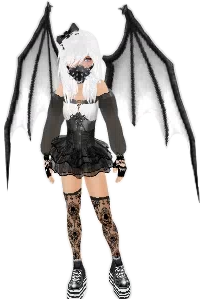
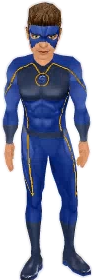
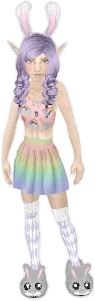
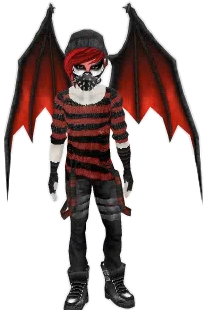
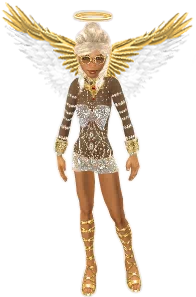
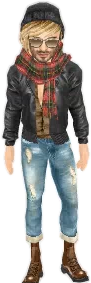
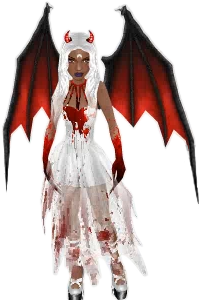
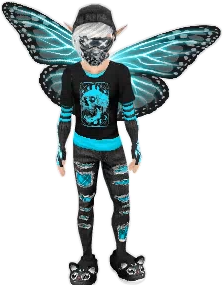
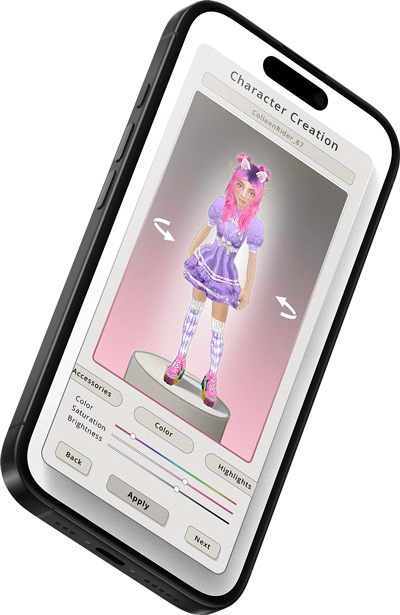
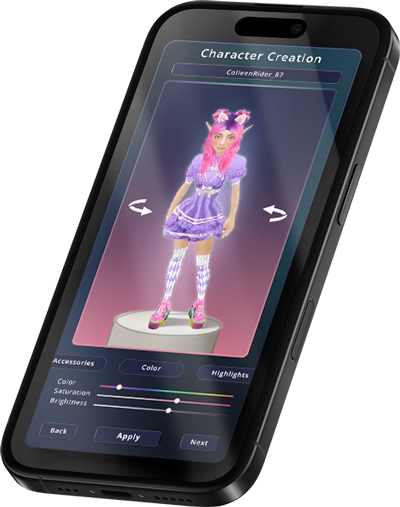
Smeet is a 3D social multiplayer game where fashion is one of the primary ways players express themselves and connect with others. As the lead of the 3D design department, I owned the full pipeline — from trend research and community input to modelling, hand-painted textures, and QA across multiple avatar types and platforms. Each week, my team and I delivered up to 60 items as a cohesive, mix-and-match collection, alongside premium and event-specific pieces designed to drive engagement and revenue.

Details

Platform

Desktop, Browser, Mobile

Team Size

1-4

Focus

Art Direction & Team Lead, Project Management, 3D Modeling, 3D Texturing, User Research

TLDR

I designed up to 60 avatar clothing items per week and eventually led the department. I covered and oversaw the whole pipeline, everything from trend research and hand-painted textures to QA across avatar types and platforms. Beyond standard drops, I created premium, event-specific, and holiday items to support revenue goals. The central challenge was sustaining high output without compromising quality, solved through structured workflows, close team collaboration, and creative workarounds within an outdated engine.

The Final Design

Understanding the Player

Empathize

01

Each week began with research. Together with my interns and content manager, I tracked current fashion trends, monitored what competitor games were releasing, and closely analyzed what was already resonating with our own player base. Player-submitted ideas through community contests added another layer of direct insight, making sure designs reflected what the community actually wanted to wear and show off.

01   ✦   EMPATHIZE

What Do Players Want to Wear?

Every week started with research — understanding player desires, community trends, and what was already performing well in-game.

 Fashion Trend Tracking

Fashion Trend Tracking

Runway collections, street fashion blogs, seasonal trend reports. Real-world references were actively translated into avatar-appropriate silhouettes, proportions, and texture approaches.

In-Game Analytics

In-Game Analytics

Purchase rates, outfit frequency in fashion shows, and wardrobe usage data. Items that underperformed were analysed and the learning fed back into the next brief.

Competitor Tracking

Competitor Tracking

Weekly review of rival avatar platforms — identifying gaps in our catalogue, styles not yet covered, and opportunities to set trends rather than follow them.

Player Contests

Player Contests

Regular community submission events where players sent outfit ideas. The best were turned into real items — creating massive engagement spikes and making players feel genuinely heard.

Team Insights

Team Insights

Weekly standups with community managers who relayed direct player feedback, forum threads, and recurring requests not captured in numbers. Qualitative signal that data missed.

Seasonal Calendar

Seasonal Calendar

Planning 4–8 weeks ahead for major events: Halloween, Christmas, Oktoberfest, Valentine's, Summer. Advance planning ensured thematic depth rather than rushed last-minute items.

01   ✦   EMPATHIZE

Three Player Archetypes We Designed For

Every week started with research — understanding player desires, community trends, and what was already performing well in-game.

The Trendsetter

The Trendsetter

Always first to wear new drops. Participates in fashion shows, influences peers, and drives first-day sales spikes. Wants bold, aspirational hero pieces.
The Social Butterfly

The Social Butterfly

Uses clothing to express personality and individuality. Cares about color, style combinations, and unique details.
The Budget-Conscious Player

The Budget-Conscious Player

Looks for items with good value and wide usability. Prioritizes affordability and versatility.

01 Trend-Driven Research

Staying relevant in a social game means understanding not just what players wear, but what they want to wear.

Staying relevant in a social game means understanding not just what players wear, but what they want to wear.

By collaborating closely with the community department, I tracked real-world fashion trends and translated them into in-game designs, ensuring collections felt current rather than generic.

02 Listening to the Community

Player feedback was treated as a continuous design input, not an afterthought.

Player feedback was treated as a continuous design input, not an afterthought.

Preferences around style, fit, and aesthetic shaped early concept decisions, making sure items landed with the audience rather than missing the mark.

<sup style="font-size: 14px;">01</sup> 

Trend-Driven Research

01 Trend-Driven Research

Staying relevant in a social game means understanding not just what players wear, but what they want to wear. By collaborating closely with the community department, I tracked real-world fashion trends and translated them into in-game designs, ensuring collections felt current rather than generic.

<sup style="font-size: 14px;">02</sup> 


Listening to the Community

02 Listening to the Community

Player feedback was treated as a continuous design input, not an afterthought. Preferences around style, fit, and aesthetic shaped early concept decisions, making sure items landed with the audience rather than missing the mark.

Setting the Direction

Define

02

From that research, I shaped a clear design direction for every weekly collection. The goal was never just a pile of individual items — each collection had to work as a complete wardrobe: one piece per category, fully wearable together, coherent enough to inspire fashion shows and partner outfit coordination, while still giving players room to mix and match across weeks.

02   ✦   DEFINE

Weekly Design Brief

Theme & Narrative

The emotional story the collection tells: "city autumn," "neon festival," "winter royalty." Sets the creative ceiling before modelling begins.

Color System

3–5 hero colors, neutrals, one statement accent. All 60 pieces draw from the same palette, guaranteeing mix-and-match coherence.

Wardrobe Coverage Map

Mandatory: top, bottom, shoes, hair, accessory, face, both male and female variants. Optional extras built on top.

Revenue Tier

Standard, exclusive, or event-limited. Determines detail investment, pricing strategy, and release timing.

Task Distribution

Which team member owns which garment categories to ensure load is balanced, and no category is overlooked.

A Collection, Not Just Items

Each weekly drop had to work as a complete, cohesive wardrobe — every category covered, every piece mix-and-matchable.

Tops

Tops

Shirts, Blouses, Jackets, Coats
Bottoms

Bottoms

Trousers, Skirts, Shorts, Dresses
Shoes

Shoes

Sneakers, Heels, Boots, Sandals
Accessories

Accessories

Bags, Belts, Jewellery

Hair

Hair

Hats, Cuts, Colours, Braids

Bottoms

Bottoms

Eyes, Lips, Blush, Freckles

Premium Items

Premium Items

Exclusive Rare Drops

Event Items

Event Items

Limited Seasonal Exclusives

01 Constraints as Creative Parameters

The outdated engine wasn't just a technical limitation. It was a design brief in itself. Working within specific data formats, absent shaders, and low-poly constraints forced every problem to be framed precisely:

The outdated engine wasn't just a technical limitation. It was a design brief in itself. Working within specific data formats, absent shaders, and low-poly constraints forced every problem to be framed precisely:

not "how do I create realistic fabric?" but "how do I suggest realistic fabric through hand-painted texture alone?"

<sup style="font-size: 14px;">01</sup> 

Constraints as Creative Parameters

01 Constraints as Creative Parameters

The outdated engine wasn't just a technical limitation. It was a design brief in itself. Working within specific data formats, absent shaders, and low-poly constraints forced every problem to be framed precisely: not "how do I create realistic fabric?" but "how do I suggest realistic fabric through hand-painted texture alone?"

Exploring Possibilities

Ideate

03

Concepts were developed with both creative ambition and hard constraints in mind. The game runs on an in-house engine with significant technical limitations. There are no advanced shaders, no real-time lighting, strict data format requirements. That meant hand-painting every texture from scratch in Photoshop and Substance Painter to achieve fabric realism, intricate patterns, and fine surface detail without relying on effects the engine simply couldn't support.

03   ✦   Ideate
How to filter the best ideas

Ideation Methods

Priority
Team Concept Reviews

Team Concept Reviews

Weekly concept reviews included interns and the content manager. Different perspectives and tastes helped avoid narrowing down the style and theme too much.

Priority
Evolve, Don't Reinvent

Evolve, Don't Reinvent

Successful designs were reanalyzed from the past week's collections. Was there room to iterate further on the design? Could the same textures be used for the next season?

Mood Boarding

Mood Boarding

Every design collection started with an initial mood board. Created through fashion editorials, historical costumes, and current examples, this determined the mood before even opening a single software tool.

Theme First

Theme First

Colours were finalized before modelling even started. It was the one skill that allowed for the creation of one cohesive collection despite having 60 pieces and multiple artists working on it.

Silhouette Sketching

Silhouette Sketching

Rapid silhouette sketching allowed for experimentation with garment shapes without creating the actual 3D model yet. This quick iteration saved time and reduced unnecessary changes later on.

Cultural Event Theming

Cultural Event Theming

For holidays such as Halloween, Oktoberfest, Christmas, Valentine's Day, and many others, ideation was largely based on culture and historical references.

01 Coherence at Scale

Creating up to 60 designs on a weekly basis would not allow for pure brainstorming.

Creating up to 60 designs on a weekly basis would not allow for pure brainstorming.

Instead, each design was created with an underlying common thread based on things such as room theme, season, or marketing purpose so that the individual designs were connected as a cohesive collection.

02 Mix-and-Match as Design Principle

A key ideation constraint was interoperability: every item had to work beyond its own outfit.

A key ideation constraint was interoperability: every item had to work beyond its own outfit.

Designing with mix-and-match potential in mind expanded the perceived wardrobe value for players and drove deeper engagement with the fashion system.

<sup style="font-size: 14px;">01</sup> 

Coherence at Scale

01 Coherence at Scale

Creating up to 60 designs on a weekly basis would not allow for pure brainstorming. Instead, each design was created with an underlying common thread based on things such as room theme, season, or marketing purpose so that the individual designs were connected as a cohesive collection.

<sup style="font-size: 14px;">02</sup> 


Mix-and-Match as Design Principle

02 Mix-and-Match as Design Principle

A key ideation constraint was interoperability: every item had to work beyond its own outfit. Designing with mix-and-match potential in mind expanded the perceived wardrobe value for players and drove deeper engagement with the fashion system.

Bringing Concepts to Life

Prototype

04

Modelling was done in Autodesk 3ds Max and Blender, with each asset built as low-poly while still reading as visually rich. Clothing had to fit seamlessly across multiple avatar body types, accounting for different proportions, animations, and dynamic movement.

04   ✦   Prototype

Production Schedule

Research & Brief

Trend review, mood board, brief sign-off, task distribution to team

Modelling

Low-poly meshes from base templates, UV layout, initial proxy fit test on avatars

Texturing

Full hand-paint pass — diffuse layers, shadow bakes, fabric surface detail

Fitting & Rigging

Avatar fit across all body types, animation state checks, clipping fixes

QA & Delivery

Final review, engine export, cross-platform check, handoff to implementation

Research & Brief

Trend review, mood board, brief sign-off, task distribution to team

Modeling

Low-poly meshes from base templates, UV layout, initial proxy fit test on avatars

Texturing

Full hand-paint pass — diffuse layers, shadow bakes, fabric surface detail

Fitting & Rigging

Avatar fit across all body types, animation checks, clipping fixes

QA & Delivery

Final review, engine export, cross-platform check, handoff to implementation

<sup style="font-size: 14px;">01</sup> 
Iterative Development

01 Iterative Development

I iterated from low- to mid-fidelity prototypes and ran A/B tests to validate the concepts early. The response? Overwhelmingly positive. The prototype underwent continuous refinement based on user input and data insights, evolving through multiple iterations.

<sup style="font-size: 14px;">02</sup> 
Design System

02 Design System

I built a modular component library with themeable design tokens, enabling rapid seasonal reskins - all while preserving visual consistency across the game's design system. The most fascinating challenge emerged in balancing macro- and micro-adaptivity. How could individual components adapt fluidly at the micro level while maintaining visual cohesion across the macro system?
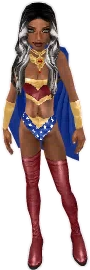
01 Texture as the Primary Medium

Since the engine did not have any shader capabilities, nor did it have any dynamic lighting capabilities, textures were the only source for creating a quality experience.

Since the engine did not have any shader capabilities, nor did it have any dynamic lighting capabilities, textures were the only source for creating a quality experience.

Painting textures by hand was the primary prototyping technique.

02 Fitting Across Bodies


Testing of clothing for diverse avatars entailed testing the design on numerous body shapes, body proportions, and body animations.

Testing of clothing for diverse avatars entailed testing the design on numerous body shapes, body proportions, and body animations.

Issues of clipping, mesh deformation, and animation problems were identified at this phase prior to any distribution to users.

04   ✦   Prototype
Efficiency systems

Sixty Items in Five Days

Each texture was fully painted by hand. There was no procedural generation, no high-poly baking tricks. The hand painting technique allowed for complete control over all seams, creases, and highlights, and importantly, ensured lightweight assets compatible with the engine.

01 Base Mesh Library

All textures were fully hand-painted, ensuring complete control over seams, creases, and highlights, while keeping assets lightweight and engine-compatible.

02 Texture Template System

Photoshop templates with dedicated layers for all key texture elements, enabling interns to produce consistent, high-quality results from day one.

03 Export Automation

Custom 3ds Max scripts automated batch exporting with proper naming conventions, saving hours of manual work per week.

04 Parallel Task Execution

Modeling and texturing ran in parallel, maximizing team efficiency throughout production.

05 QA Process Standards

A 10-point checklist per asset eliminated recurring mistakes and minimized post-release updates.

06 Intern Training Program

Standardized documentation and templates made new interns productive within a week, crucial during team fluctuations.

Special Items & Costumes

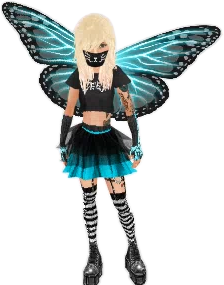
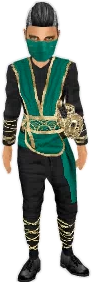
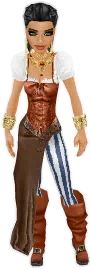
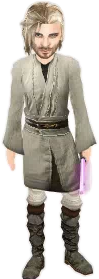
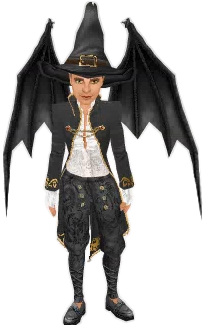
These full-body costume sets are designed for themed events and seasonal celebrations. Each costume tells a visual story while offering cohesive male and female variants that work together as a complete collection.

Tops, Jackets, Sweater

The pieces are built to mix and match freely within and across collections, to give players as much flexibility as possible.

Dresses & Skirts

Elegant and expressive dresses were crafted for a wide range of occasions, from casual social hangouts to festive in-game events

Shoes

Good footwear can make or break an outfit, so every pair receives the same level of detail and care as larger pieces.

Testing with Users

Test

05

After implementation, every item went through me, before even thinking about giving it to QA. I checked for common mistakes and verified visual consistency. Afterwards, player feedback and in-game data revealed which designs resonated and fed directly back into the next week's creative decisions.

<sup style="font-size: 14px;">01</sup> 

Implementation as Validation

01 Implementation as Validation

The testing process did not occur separately but was part of the implementation stage.

The testing process did not occur separately but was part of the implementation stage.

Once an asset became live, I ensured that it was in perfect harmony with all other avatars and visually coherent in terms of fit and alignment.

<sup style="font-size: 14px;">02</sup> 


Community Response as a Feedback Loop

02 Community Response as a Feedback Loop

Engagement of the players, the actions taken during the fashion show, and the purchase decisions formed real usability signals in the environment.

Engagement of the players, the actions taken during the fashion show, and the purchase decisions formed real usability signals in the environment.

Successful reactions confirmed good decisions in design; poor responses helped formulate the process for the coming week’s iteration.

04   ✦   Test
Ensuring Quality

10-point QA checklist

Every item went through a structured review process, covering everything from mesh integrity to in-game presentation.

Alignment correct across all avatar body types

No mesh clipping in idle animation state

No clipping in walk, run, and emote animations

Texture seams are invisible in final in-engine render

Visual consistency with all other items in the collection

Male & female equally distributed and polished

Asset file size within engine performance budget

No z-fighting when layered with other garments

What We Achieved

Impact & Learnings

06

Working on such a scale for four years showed that quality and efficiency can only exist together if processes are designed purposefully. This is what I learned from my experience.

✦   Impact & Learnings
Final Notes

Key Takeaways

Efficiency
Systems beat talent alone

Systems beat talent alone

I optimized workflows to deliver high-quality results within tight deadlines, prioritizing tasks to maintain detail and meet project timelines. This ensured polished, immersive visual assets, supporting rapid development without compromising quality.

All Perspectives
Communication

Communication

Clear, open communication integrated diverse perspectives, ensuring a unified vision. This adaptability allowed for smooth changes, new features, and technical adjustments. The collaborative environment fostered mutual respect and innovation, driving successful outcomes.

✦   Impact & Learnings
Final Notes

The Impact

Positive Feedback
Increased User Satisfaction

Increased User Satisfaction

I was implementing designs that resonate well with the player community, resulting in higher engagement, positive feedback, and revenue growth.

Adaptability
Constraints Produce Character

Constraints Produce Character

For 4 years, I consistently delivered up to 60 high-quality items weekly, overcoming outdated technology with creativity and resourcefulness to find innovative solutions.

✦   Contact Me

Have a project in mind?

Looking for collaboration? Send an email to contact@vhoffmann.design for inquiries and projects or fill out the form.

Send a Message


    This website uses cookies to improve your web experience.